
Flower Field Guide
Alstroemeria (genus) · Alstroemeriaceae
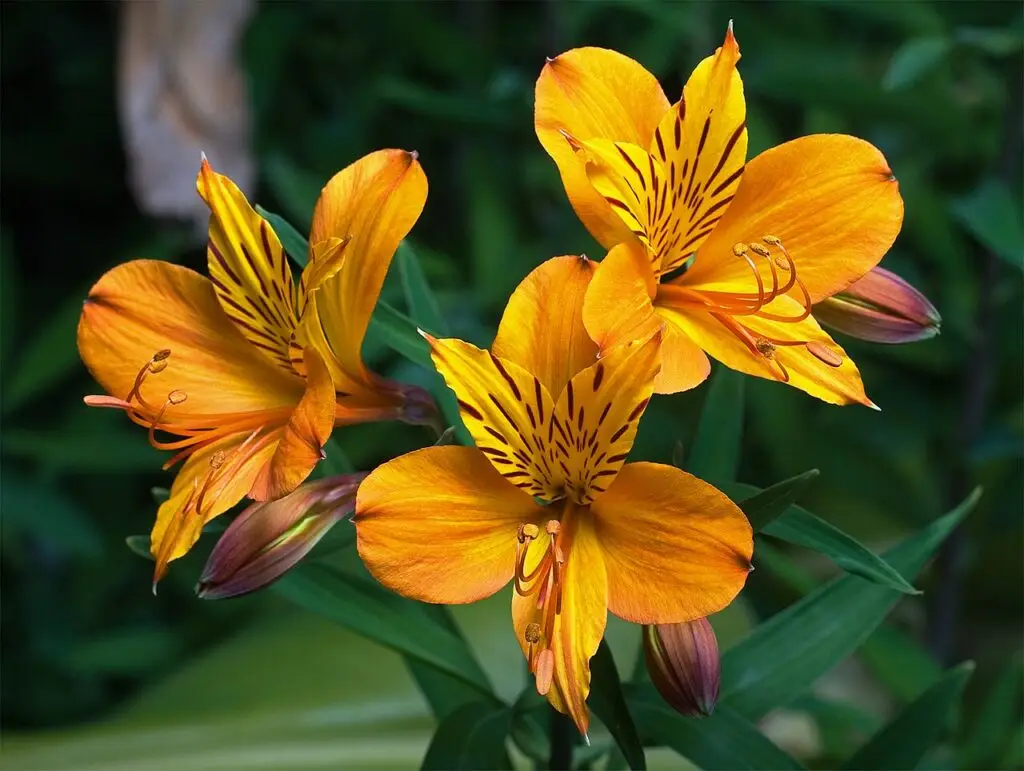
Photo: JJ Harrison, CC BY-SA 3.0, via Wikimedia Commons
✿
Best in Santa Barbara County
Spring through fall; modern hybrids can flower most of the year
Family
Alstroemeriaceae
Native to
South America (mainly central Chile and eastern Brazil)
Plant type
Long-lived perennial that grows from tubers
At our farm
Orange/Yellow
Pink
Pink/White
Red
Alstroemeria, which most people call the Peruvian lily or the lily of the Incas, is a group of flowering plants that all come from South America. Most of the wild species grow in two hotspots: central Chile and eastern Brazil. Each flower has six petals and comes in almost every color you can think of (red, orange, yellow, pink, purple, white), usually with darker streaks and freckles that make every bloom look hand-painted. The genus is named after Clas Alströmer, a Swedish baron who was friends with Carl Linnaeus, the scientist who basically invented the way we name plants.
In the wild, the Chilean species grow during winter and the Brazilian species grow during summer. Plant breeders figured out that crossing the two creates hybrids that stay green almost all year and keep flowering for most of it. Today there are at least 190 named varieties. In Santa Barbara County, Alstroemeria usually blooms hardest in spring and early summer and keeps going well into fall.
About 80% of Chile's Alstroemeria species live in the Mediterranean shrubland of central Chile, which has almost the exact same climate we do: mild, rainy winters, dry summers, and cool air coming off the ocean. So growing Alstroemeria on the Gaviota Coast is kind of like bringing it home. The marine layer keeps the plants from overheating in summer, and because we hardly ever get a hard frost, the tubers can stay in the ground year after year.
Alstroemeria leaves grow upside down. Each leaf twists on its stem so that the underside faces the sky, which botanists call "resupinate."
Want to see it in person? Come cut your own at Harris Gaviota Farm. Check what's blooming on our You-Pick availability sheet.
Source: adapted from the Wikipedia article "Alstroemeria" (CC BY-SA 4.0).
