
Flower Field Guide
Amaranthus caudatus and related species · Amaranthaceae
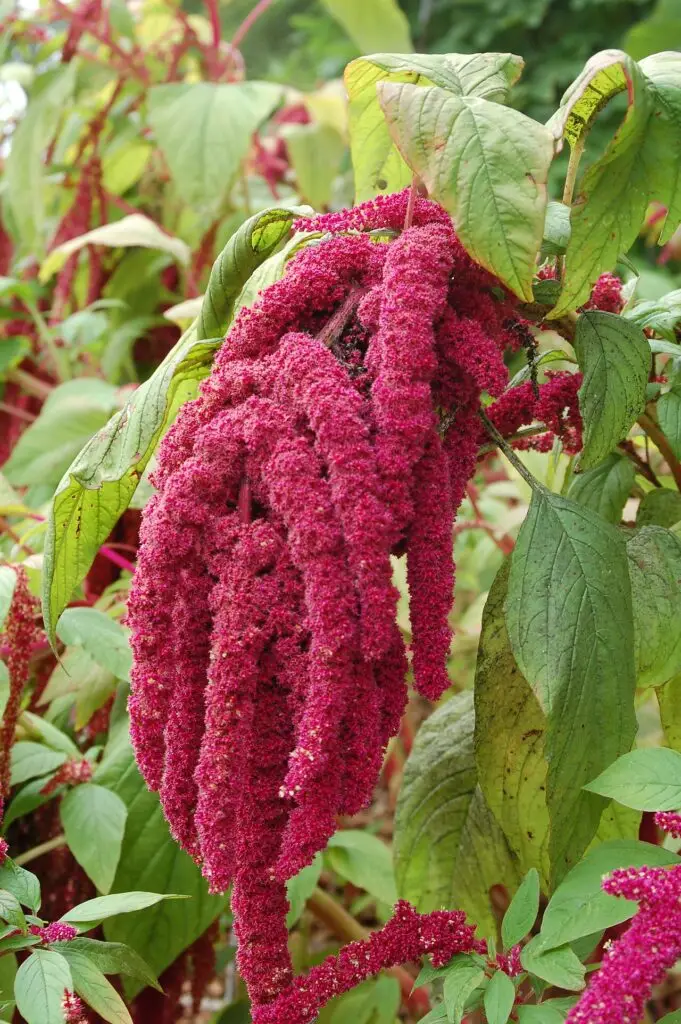
Photo: Tubifex, CC BY-SA 3.0, via Wikimedia Commons
✿
Best in Santa Barbara County
Midsummer through fall
Family
Amaranthaceae
Native to
The Andes Mountains of South America
Plant type
Warm-season annual
At our farm
‘Emerald Tassels’
‘Love-Lies-Bleeding’
‘Red Spike' (sold 5 stems per bunch)
Amaranth is definitely the most dramatic flower in the field. The best-known type, Amaranthus caudatus, grows long, rope-like flower tassels that can reach about 35 inches (90 cm) and hang down like velvet curtains. The plant itself can get up to 8 feet tall. The tassels range from deep red to creamy white, and there are green types too, like our 'Emerald Tassels.' The nickname "love-lies-bleeding" comes from the Victorian era, when every flower had a secret meaning. This one stood for hopeless love, and the red tassels honestly do look like dripping drops of blood.
Amaranth is an annual, so it grows from seed every year. Seeds go in the ground in spring once the soil warms up, and the plants start flowering in midsummer. They keep producing until cooler weather shows up in late fall.
Amaranth was grown in the high Peruvian Andes for thousands of years by cultures including the Incas, and it's the only amaranth species that can grow above 8,200 feet. That means it's tough. It likes lots of sun and doesn't need a ton of water once it's established, which makes it a good match for our long, dry summers. Since the Gaviota Coast rarely frosts early, the tassels keep growing longer and longer into fall.
Amaranth is food, too. The leaves and seeds are edible, and the grain was a major Inca crop until Spanish colonists replaced it with wheat and barley in the 1500s. Because it's so nutritious, it's making a comeback today.
Want to see it in person? Come cut your own at Harris Gaviota Farm. Check what's blooming on our You-Pick availability sheet.
Source: adapted from the Wikipedia article "Amaranthus caudatus" (CC BY-SA 4.0).
