
Flower Field Guide
Xerochrysum bracteatum (formerly Helichrysum bracteatum) · Asteraceae
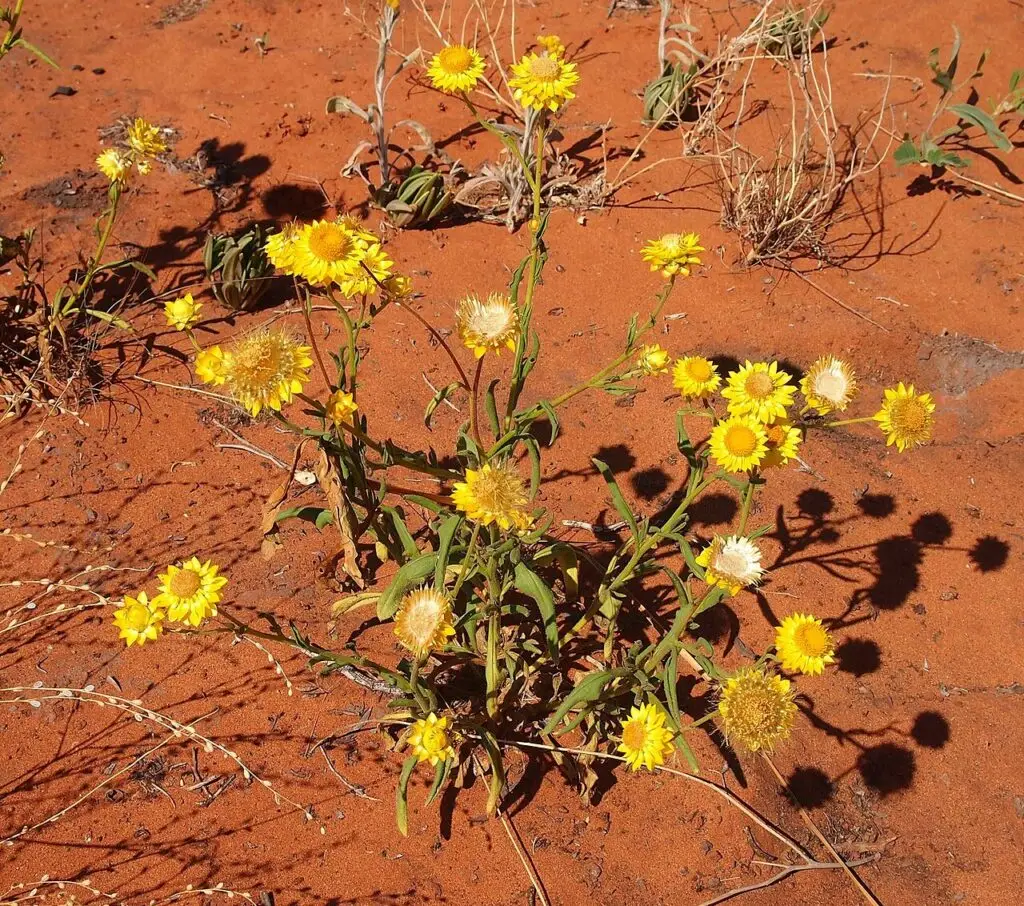
Photo: Mark Marathon, CC BY-SA 3.0, via Wikimedia Commons
✿
Best in Santa Barbara County
Spring through fall
Family
Asteraceae (the daisy family)
Native to
Australia
Plant type
Annual or short-lived perennial, up to about 3 feet tall
At our farm
‘Apricot/Peach’
‘Cranberry Rose’
‘King Size Gold’
‘Silvery Rose’
‘Vintage White’
Strawflowers are famous for their crunchy, papery "petals." Those aren't actually petals. They're stiff bracts that surround the real flowers in the center. Wild strawflowers are mostly golden yellow or white, but in the 1850s a German plant breeder named Herren Ebritsch developed versions in bronze, purple, and lots of other colors, which is how we got varieties like 'Cranberry Rose' and 'Silvery Rose.' For a long time scientists called the plant Helichrysum bracteatum, but it was moved into its own group, Xerochrysum, in 1990.
Strawflowers bloom from spring all the way through fall. In Santa Barbara County that means a really long season of picking.
Strawflowers grow wild in every state of Australia, in habitats from rainforest edges to deserts and subalpine mountains, basically everywhere except deep shade. In Central Australia they even grow in red sand and race to bloom whenever it rains. A plant that tough has no problem with our dry summers, sunny days, and sandy coastal soil.
The name Xerochrysum roughly means "dry gold" in Greek, which makes sense because strawflowers keep their color for a long time after drying. That's why they're also called "everlastings."
Want to see it in person? Come cut your own at Harris Gaviota Farm. Check what's blooming on our You-Pick availability sheet.
Source: adapted from the Wikipedia article "Xerochrysum bracteatum" (CC BY-SA 4.0).
